Performing Sa’i between Safa and Marwa is one of the essential rituals of Umrah and Hajj. It is a deeply spiritual act. It reminds Muslims of the unwavering faith and patience of Hajar (AS), the wife of Prophet Ibrahim (AS). As pilgrims walk between these two hills, they remember Allah and make heartfelt supplications, reflecting on their own journey of faith.
Among the most important aspects of Sa’i is the recitation of the Safa Marwa dua, which is of great significance in connecting the believer to Allah. Understanding its Arabic text, translation, and meaning allows pilgrims to perform this ritual with greater mindfulness and devotion.
The Significance of Safa and Marwa
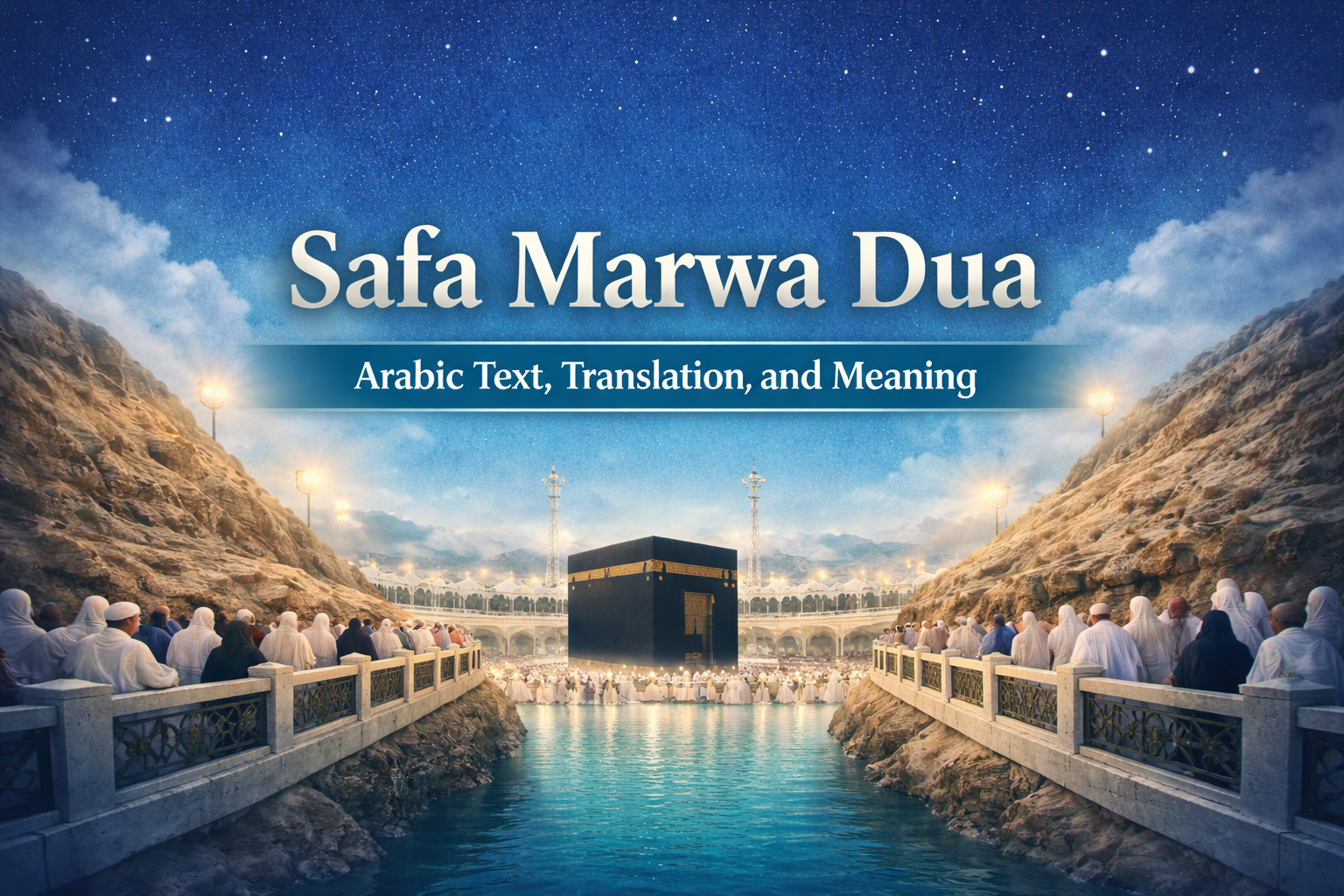
Safa and Marwa are two small hills near the Kaaba in Masjid al-Haram in Makkah. Walking between them seven times is called Sa’i. This act commemorates Hajar’s (AS) struggle as she searched for water for her son Ismail (AS).
Her trust in Allah was rewarded with the miracle of Zamzam water. This spring continues to flow to this day. The powerful story teaches Muslims about faith, patience, and relying on Allah during hardship.
Today, millions of Muslims perform Sa’i each year, making it a vital part of their pilgrimage. While many also explore different umrah deals to make their journey easier, the spiritual essence of Sa’i remains unchanged and deeply meaningful.
Safa Marwa Dua in Arabic
When a pilgrim reaches Safa to begin Sa’i, it is recommended to face the Kaaba, raise hands, and recite the following verse from the Quran:
إِنَّ الصَّفَا وَالْمَرْوَةَ مِن شَعَائِرِ اللَّهِ
Arabic (Full Verse):
إِنَّ الصَّفَا وَالْمَرْوَةَ مِن شَعَائِرِ اللَّهِ ۖ فَمَنْ حَجَّ الْبَيْتَ أَوِ اعْتَمَرَ فَلَا جُنَاحَ عَلَيْهِ أَنْ يَطَّوَّفَ بِهِمَا ۚ وَمَنْ تَطَوَّعَ خَيْرًا فَإِنَّ اللَّهَ شَاكِرٌ عَلِيمٌ
English Translation
“Indeed, Safa and Marwa are among the symbols of Allah. So whoever performs Hajj to the House or performs Umrah, there is no blame upon him for walking between them. And whoever volunteers is good, then indeed, Allah is Appreciative and Knowing.”
The Meaning and Reflection
This verse highlights the spiritual significance of walking between Safa and Marwa. Pilgrims are reminded that Sa’i involves more than physical movement; it is a chance to renew trust in Allah and reflect on Hajar’s (AS) struggle. Each step offers an opportunity to reinforce patience, gratitude, and the importance of turning to Allah in hope and perseverance.
The phrase “symbols of Allah” reminds believers that every step taken during Sa’i is an act of worship. It reflects submission to Allah and acknowledgement of His عظیم wisdom and mercy. The verse also reassures that performing Sa’i is a noble and accepted act, encouraging Muslims to engage in it wholeheartedly.
Recommended Supplications During Sa’i
There is no single fixed dua that must be recited throughout Sa’i. Pilgrims are encouraged to make personal supplications and remember Allah in their own words. It is Sunnah, however, to recite the following at Safa and Marwa:
لَا إِلَٰهَ إِلَّا اللَّهُ وَحْدَهُ لَا شَرِيكَ لَهُ
لَهُ الْمُلْكُ وَلَهُ الْحَمْدُ وَهُوَ عَلَىٰ كُلِّ شَيْءٍ قَدِيرٌ
English Translation of the Supplication
“Allah is the Greatest, Allah is the Greatest, Allah is the Greatest. There is no god but Allah alone, without a partner. To Him belongs the dominion and to Him belongs all praise, and He has power over all things.”
Spiritual Benefits of Reciting Safa Marwa Dua
Reciting these supplications during Sa’i brings spiritual benefits. It strengthens the believer’s connection with Allah and allows for sincere reflection.
First, it helps develop humility. As pilgrims walk the same path as Hajar (AS), they are reminded of human ضعف and the need for divine help. Second, Sa’i nurtures patience and perseverance, since it requires physical effort and focus.
Making dua during this ritual is also a powerful way to seek forgiveness, guidance, and blessings. Many pilgrims use this time to ask Allah for their deepest needs. They believe in His mercy and generosity.
Tips for Making Meaningful Dua During Sa’i
To make the most of the Sa’i experience, approach it with sincerity and an attentive heart.
- Begin with praising Allah and sending blessings upon the Prophet.
- Make personal supplications that come from your heart.
- Reflect on the story of Hajar (AS) and draw inspiration from her faith.
- Avoid distractions and focus on remembering Allah.
By doing so, your Sa’i becomes more than just a ritual; it becomes a deeply personal act of worship.
Common Mistakes to Avoid
While performing Sa’i, some pilgrims make common mistakes that can diminish the ritual’s spiritual impact.
One common error is rushing through the rounds without reflection. Sa’i is not a race; it is an opportunity for connection with Allah. Another mistake is limiting oneself to memorised duas without understanding their meaning.
Additionally, some people neglect to make personal supplications, missing a valuable opportunity to communicate directly with Allah. Being mindful of these mistakes can help improve the overall experience.
Conclusion
The Safa Marwa dua is a vital part of the Sa’i ritual. It enriches the spiritual journey of every pilgrim. Reciting the Arabic text, understanding its translation, and reflecting on its meaning deepens a believer’s connection with Allah.
This sacred act reminds us of faith, patience, and trust in Allah’s plan. As you walk between Safa and Marwa, let your heart be filled with hope, gratitude, and sincere الدعاء. In doing so, your pilgrimage becomes both a physical journey and a transformative spiritual experience.
Onais is an Arabic language specialist who completed his Bachelor’s in Arabic from the International Islamic University, Islamabad, and is currently pursuing his Master’s degree there. Having lived in the UAE for 17 years, he brings strong command of Middle Eastern Arabic dialects and focuses on practical, easy-to-understand Arabic language courses.