“The one who was devoted to the Qurʾān will be told [on the Day of Resurrection:] ‘Recite [the Qurʾān] and ascend [in ranks] as you used to recite when you were in the world. Your rank will be at the last verse you recite.'”
This powerful hadith reminds us why learning how to read Quran easily is not just a spiritual pursuit but an eternal investment. Whether you’re completely new to Arabic script or looking to improve your recitation, we understand the journey can seem overwhelming at first.
Indeed, learning the Quran for beginners requires patience and structured guidance. With 114 chapters containing varying lengths and complexities, knowing where and how to start makes all the difference. The good news? You don’t need to be in a traditional madrasa to make progress – learning Quran at home has become increasingly accessible.
In this step-by-step guide, we’ll walk you through the best way to learn Quran, from mastering the basics of Uthmani script to building daily reading habits. We’ll also explore practical tools like the Noorani Qaida, which has proven effective for beginners and adults alike who want to read the Holy Book with perfection.
Furthermore, our approach focuses on building both technical skills and spiritual connection, as “Whenever a group of people assemble… reciting the Book of Allāh and studying it, tranquility descends upon them, Mercy covers them…”
Let’s begin this rewarding journey together!
Step 1: Start with the basics of Arabic reading
Beginning your Quranic journey requires mastering the fundamentals of Arabic script. The Arabic language, being the language of revelation, forms the foundation for anyone seeking to read the Holy Book accurately.
Learn the Arabic alphabet and pronunciation
The Arabic alphabet consists of 28 unique letters, each with its own distinct sound and articulation point. Unlike English, where letters can have multiple sounds, Arabic letters maintain consistent pronunciation. Initially, focus on:
- Recognizing all Arabic letters correctly
- Understanding how letters change shape based on their position in a word
- Practicing difficult letters from the throat and tongue
Many letters in Arabic have no equivalent sounds in English, especially the throatal letters like خ (Khaa), غ (Ghayn), and ح (Haa). Consequently, listening to native speakers or skilled reciters helps develop proper pronunciation habits.
Use Noorani Qaida or similar beginner guides
Noorani Qaida stands as the most straightforward method for those learning how to read Quran for beginners. This foundational guide:
- Teaches the fundamentals of Arabic alphabet and pronunciation
- Contains almost all the pronunciation rules for reciting the Holy Quran
- Guides beginners through proper articulation of letters
- Helps develop a solid basis for learning Tajweed rules
For those wondering about the best way to learn Quran, starting with Noorani Qaida provides an approachable reference that gradually builds your reading skills.
Practice short vowels and simple words
Arabic vowels, known as Harakat (حركات), are vital yet often challenging for beginners. The three essential short vowels are:
- Fatha (ـَ) – produces a short “a” sound as in “ba”
- Kasra (ـِ) – produces a short “i” sound as in “bi”
- Damma (ـُ) – produces a short “u” sound as in “bu”
Unlike English, these vowels appear as small marks above or below consonants. Practice combining consonants with vowels to form simple words. For instance, combining فـَ ـعـَ ـلَ produces “fa’ala.”
Once comfortable with individual letters and vowels, gradually move toward forming and reading simple words. Regular practice with these basics creates a strong foundation, making how to learn Quran at home more manageable and systematic.
Step 2: Begin reading the Quran gradually
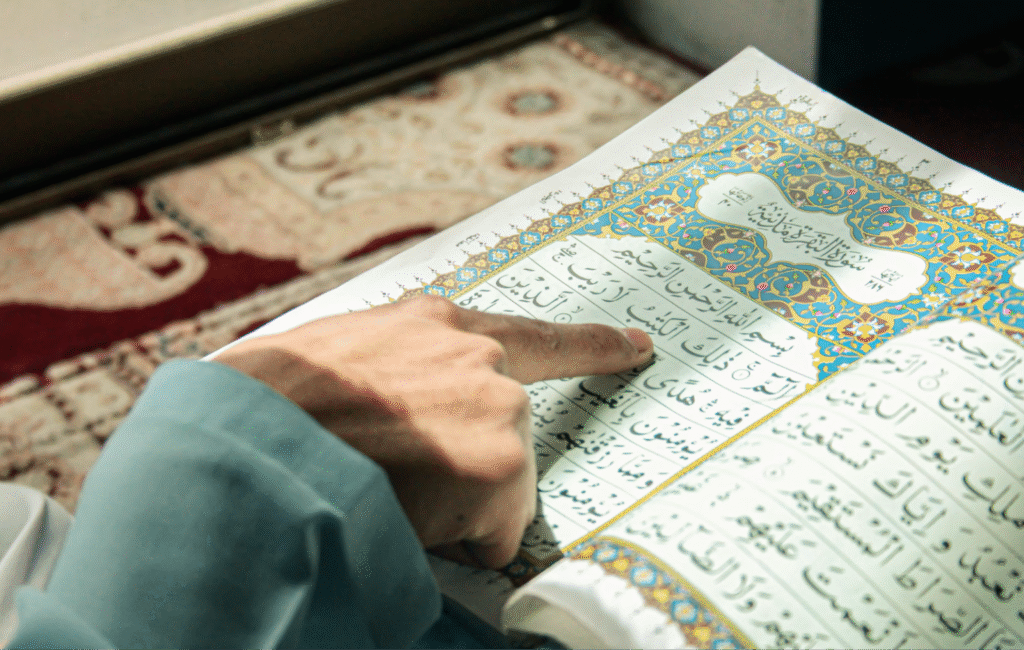
After mastering the Arabic alphabet, the next milestone in your journey is to begin actually reading the Quran. Rather than diving into the entire text, a methodical approach yields better results for beginners.
Start with short and easy chapters
The final portion of the Quran (Juz Amma) contains numerous brief surahs perfect for beginners. These short chapters are often easier to memorize and recite, making them ideal starting points. Consider beginning with:
- Surah Al-Kawthar (3 verses)
- Surah Al-Asr (3 verses)
- Surah Al-Ikhlas (4 verses)
- Surah Al-Falaq (5 verses)
- Surah Al-Nas (6 verses)
These surahs not only build confidence through quick achievements but additionally offer profound spiritual lessons despite their brevity. Many beginners find Surah Al-Fatiha essential since it’s recited in every prayer unit.
Avoid long surahs in the beginning
One common mistake is attempting to read too much too quickly, which often leads to frustration. Instead of overwhelming yourself with lengthy chapters, set smaller, achievable goals. Start with memorizing a few verses daily or mastering a short surah completely before moving to longer ones.
As you progress, gradually increase the difficulty level. Remember, the quality of recitation matters more than quantity—perfecting pronunciation in small portions creates a stronger foundation than rushing through larger sections with mistakes.
Use a teacher or app to correct mistakes
Although self-study is valuable, many learners make the mistake of never seeking correction from a trained teacher. Finding a qualified instructor who can listen and correct your recitation is crucial for proper learning. They provide personalized feedback on your pronunciation and help identify mistakes you might not notice yourself.
Alternatively, numerous Quran learning apps offer interactive features to guide beginners. Apps like Quran Companion, Tarteel, or Quranic can track your pronunciation and help refine your recitation skills. Several platforms even provide opportunities to recite to live teachers online for immediate correction.
The talaqqi method—reciting under a knowledgeable teacher’s guidance—remains the most authentic approach to learning Quran properly.
Step 3: Improve your recitation and tajweed
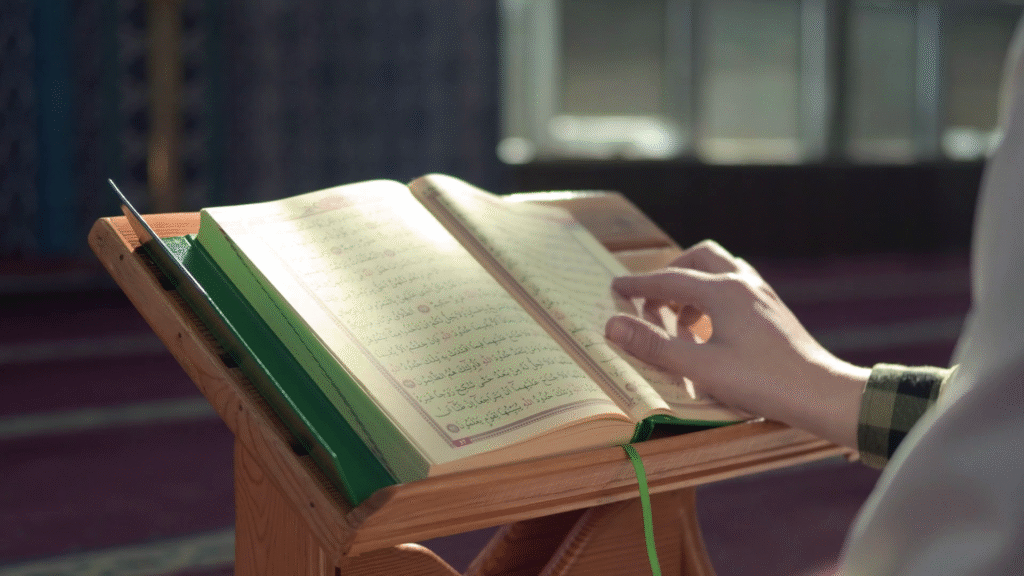
Once you’ve developed basic reading skills, mastering tajweed becomes your pathway to reciting the Quran beautifully and correctly. Tajweed literally means “to improve” or “to make well,” referring to the proper pronunciation of Quranic words.
Understand the rules of tajweed
Tajweed involves mastering specific rules governing letter pronunciation and recitation flow. The foundation begins with understanding:
- Makharij (articulation points) – knowing exactly where each letter originates in your mouth and throat
- Heavy and light letters – certain Arabic letters require fuller pronunciation (like ص, ط, ق)
- Noon Sakinah and Tanween rules – these include Izhar (clear), Idgham (merging), Iqlab (changing), and Ikhfa (concealment)
- Qalqalah – the echoing sound for specific letters (ق, ط, ب, ج, د)
Practice with audio recitations
Listening to expert reciters helps train your ear for proper pronunciation. Moreover, platforms like Quran.com and QuranicAudio.com offer recordings from renowned Qaris.
Record yourself reciting, then compare with professional recordings to identify areas needing improvement. This approach helps perfect your pronunciation and rhythm.
Learn where to pause and elongate
Proper pausing (waqf) and starting (ibtida) maintain the Quran’s meaning. Additionally, understanding elongation (madd) rules—where to extend sounds by 2, 4, or 6 counts—creates melodious recitation.
Practice breathing techniques to manage longer verses without disrupting meaning.
Choose a Qira’at style if desired
Qira’at refers to different recitation styles, with Hafs from Asim being the most widely used worldwide. Other styles include Warsh and Qalun. For beginners, focus on mastering basic tajweed before exploring different Qira’at styles.
Remember, learning tajweed requires consistency, dedication, and ideally, guidance from a qualified teacher.
Step 4: Build consistency and deepen understanding
Building a relationship with the Quran goes beyond mastering its recitation. This final step encompasses establishing regular habits and creating meaningful connections with the divine text.
Set a daily reading schedule
The foundation of Quranic learning rests on consistency. Fixed daily sessions yield greater results than irregular, longer study periods. Early morning after Fajr is ideal, as this time offers peak focus and memory retention. Alternatively, after Isha prayer provides quieter evenings for concentration.
Whatever time you choose, treat these sessions as important appointments. Even 15-30 minutes daily leads to substantial progress over time. Remember to recite at the same time daily to reinforce the habit.
Reflect on meanings with translation
Understanding transforms mere recitation into spiritual nourishment. Use reliable translations to grasp the context and message behind each verse. This practice creates stronger neural pathways for retention while deepening your connection.
In fact, children and adults alike memorize faster when they comprehend why an ayah is meaningful. The process of tadabbur (deep reflection) opens doors to Quranic wisdom that simple reading cannot provide.
Apply verses in daily life
The Quran’s teachings aren’t meant for bookshelves. They should guide your decisions and actions. For instance, when learning verses about honesty, practice truthfulness in your interactions. When studying passages about compassion, implement mercy in your relationships.
This holistic integration transforms the Quran from text to be memorized into a comprehensive guide for daily living.
Decide if you want to memorize (Hifz)
Memorizing the Quran (Hifz) is among the most virtuous acts in Islam. If you choose this path, understand it requires dedication but carries immense spiritual rewards. Typically, consistent students complete Hifz in 2-5 years, though timelines vary based on commitment and capacity.
Allocate time wisely—70% for revising previously memorized portions and 30% for new material. Quality always surpasses quantity in this spiritual journey.
Conclusion
Learning the Quran represents a beautiful journey rather than a destination. Throughout this guide, we’ve outlined practical steps to make this sacred pursuit accessible and manageable for beginners. Most importantly, remember that patience remains your greatest ally when developing Quranic reading skills.
Starting with Arabic fundamentals creates a solid foundation upon which all other skills can flourish. Additionally, the gradual approach of beginning with shorter surahs builds confidence while preventing overwhelm. Tajweed rules, though initially challenging, ultimately transform your recitation into something more beautiful and meaningful.
Consistency undoubtedly matters more than quantity. Five minutes daily yields better results than sporadic hour-long sessions weekly. Meanwhile, understanding the meanings behind what you recite connects your heart to the words, making memorization easier and more impactful.
Remember, everyone progresses at different rates – your journey belongs uniquely to you. Whether you simply wish to read correctly or aspire to complete hifz, each step forward represents spiritual growth. The Prophet Muhammad emphasized that the one who struggles with Quranic recitation receives double the reward due to their effort.
After all, the Quran wasn’t revealed merely for recitation but as a comprehensive guide for life. Therefore, implementing its teachings in your daily actions completes the circle of learning. As you continue this rewarding journey, take pride in every small achievement, knowing each letter recited brings blessings and draws you closer to spiritual excellence.
Key Takeaways
Learning the Quran is a structured journey that becomes manageable when broken into clear, progressive steps. Here are the essential insights for beginners:
• Start with Arabic alphabet mastery using Noorani Qaida – proper pronunciation foundation prevents future mistakes • Begin reading with short surahs like Al-Ikhlas and Al-Nas to build confidence before tackling longer chapters • Focus on tajweed rules and practice with audio recitations to achieve beautiful, correct pronunciation • Establish daily 15-30 minute reading sessions for consistency – small daily efforts outperform sporadic long sessions • Combine recitation with translation study to deepen understanding and strengthen memorization • Seek guidance from qualified teachers or apps for correction – self-study alone often reinforces mistakes
Remember, the Quran rewards both the fluent reciter and the one who struggles with double blessings. Quality and consistency matter more than speed, making this sacred journey accessible to learners at any level.
FAQs
Q1. What are the initial steps to start learning the Quran? Begin by mastering the Arabic alphabet and basic pronunciation using tools like Noorani Qaida. Then, learn essential tajweed rules and start with short, easy chapters like Al-Ikhlas or Al-Nas before progressing to longer ones.
Q2. How can I improve my Quran memorization skills? Assign meaning to what you’re memorizing, recite out loud, use memory devices, and understand the text’s context. Regular practice, breaking your study into manageable chunks, and utilizing memorized verses in prayer can also enhance retention.
Q3. What is the most effective way to establish a consistent Quran learning routine? Set a daily reading schedule, preferably at the same time each day. Even 15-30 minutes of focused study can lead to significant progress. Consider early morning after Fajr or evening after Isha for optimal concentration.
Q4. How important is understanding the meaning while learning to recite the Quran? Understanding the meaning is crucial. Use reliable translations to grasp the context and message of each verse. This practice not only aids memorization but also deepens your spiritual connection and helps apply Quranic teachings in daily life.
Q5. Can I learn the Quran without a teacher? While it’s possible to learn independently using resources like apps and online platforms, guidance from a qualified teacher is highly recommended. A teacher can provide personalized feedback, correct pronunciation errors, and ensure proper understanding of tajweed rules.
Onais is an Arabic language specialist who completed his Bachelor’s in Arabic from the International Islamic University, Islamabad, and is currently pursuing his Master’s degree there. Having lived in the UAE for 17 years, he brings strong command of Middle Eastern Arabic dialects and focuses on practical, easy-to-understand Arabic language courses.