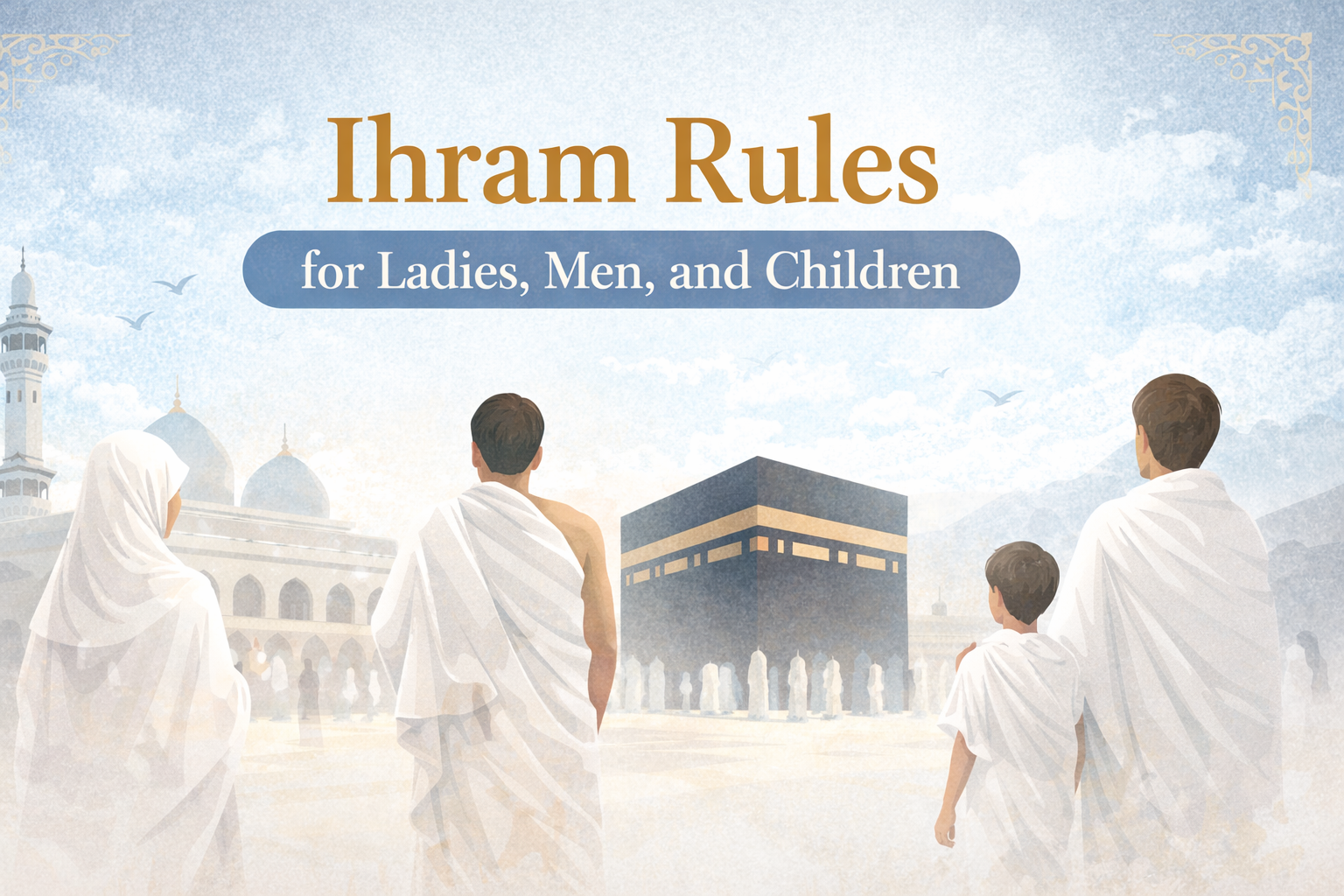
Ihram is one of the most sacred aspects of Hajj and Umrah. It represents a state of physical and spiritual purity and marks the beginning of the pilgrim’s journey into worship and devotion. Whether you are a woman, a man, or a child, understanding the rules of Ihram is essential to perform Hajj or Umrah correctly. This complete guide will explain the Ihram rules, attire, behavior, and etiquette for all pilgrims, along with some tips for preparation.
What is Ihram?
Ihram is both a physical attire and a spiritual state. Physically, it refers to wearing specific clothing designated for men and women. Spiritually, it requires the pilgrim to abstain from certain actions, maintain a high level of humility, and focus entirely on worship. Entering the state of Ihram is done at the Miqat, a designated boundary that pilgrims must not cross without assuming Ihram.
Ihram Rules for Men
1. Ihram Clothing for Men
Men wear two white sheets, called Rida (covering the upper body) and Izar (covering the lower body). Men must not wear stitched garments tailored to fit the body (such as shirts, trousers, or underwear). However, belts, watches, rings, safety pins, and stitched edges on the Ihram cloth are permitted. Men uncover the right shoulder only during Tawaf (Idtiba), not at all times.
2. Prohibited Acts for Men
While in Ihram, men must avoid the following:
Wearing stitched clothing tailored to the body or shoes covering the ankles
Using perfume or scented products after entering Ihram
Cutting hair or nails
Hunting land animals (harmful creatures may be killed if necessary)
Engaging in sexual activity
Quarreling or speaking harshly
3. Recommended Practices
Begin Ihram with the Niyyah (intention in the heart) and recitation of the Talbiyah:
“Labbayka Allahumma Labbayk…”
Keep thoughts pure and focus on prayers and dhikr.
Walk humbly, maintain patience, and respect other pilgrims.
Ihram Rules for Women
1. Ihram Clothing for Women
Women can wear any modest clothing that covers the entire body. They should not wear a niqab or gloves while in Ihram. However, if non-mahram men are present, they may cover the face loosely with a scarf or jilbab. The clothing must be loose and not resemble men’s attire. Women are not required to wear specific colors but are encouraged to choose simple, plain garments.
This is supported by the narration of Aisha bint Abi Bakr (may Allah be pleased with her), who said:
“Riders would pass by us while we were in the state of ihram with the Messenger of Allah ﷺ. When they came near us, one of us would lower her outer garment (jilbab) from her head over her face, and when they had passed, we would uncover it.”
Reported by Abu Dawud (Sunan Abi Dawud 1833) and Ahmad ibn Hanbal in his Musnad.
This hadith clarifies that women did not wear a stitched niqab in Ihram, but they covered their faces temporarily when non-mahram men were present.
2. Prohibited Acts for Women
Women in Ihram must avoid:
Using perfume or scented cosmetics after entering Ihram
Cutting hair or nails
Engaging in sexual activity
Quarreling or speaking harshly
Hunting land animals
3. Recommended Practices
Wear comfortable clothing suitable for long walks between Safa and Marwa.
Ensure your footwear is simple and easy to remove.
Make frequent duas and recite Talbiyah while walking.
Women are encouraged to remain patient and help one another during the pilgrimage.
Ihram Rules for Children
1. Clothing for Children
Children are not required to enter Ihram, but it is encouraged for training and reward. They may wear simple, modest clothing suitable for the pilgrimage. Boys may wear a small Izar and Rida like men, while girls may wear loose-fitting dresses that cover their bodies.
2. Rules and Prohibitions
Children should avoid quarrels, fighting, or disobedience.
Young boys and girls are encouraged to recite the Talbiyah along with adults.
Parents must guide children to behave respectfully and maintain focus during rituals.
3. Spiritual Benefits
Introducing children to Ihram teaches them discipline, patience, and the importance of spiritual purification from a young age. It creates lifelong habits of respect and devotion, and parents are rewarded for guiding them.
General Rules of Ihram for All Pilgrims
Entering Ihram at Miqat: All pilgrims must assume Ihram at the designated Miqat points before crossing into Makkah. If someone crosses the Miqat without Ihram, they must return to the Miqat or offer a compensatory sacrifice (dam); it does not invalidate the pilgrimage.
Intention and Talbiyah: Niyyah (intention) must be made sincerely in the heart, and pilgrims should recite Talbiyah frequently:
“Labbayka Allahumma Labbayk….”
Avoiding Forbidden Acts: Whether male, female, or child, pilgrims must refrain from:
Sexual activity
Arguing or shouting
Hunting land animals
Using perfume or scented oils after entering Ihram
Respect for Others: Ihram is a communal state of devotion. Pilgrims must maintain patience, respect personal space, and help each other in crowded areas.
Maintaining Cleanliness: While in Ihram, personal hygiene is important. Pilgrims may bathe and change their Ihram garments if necessary, and should keep the area tidy.
Ihram and Modern Travel
For those booking Umrah packages, especially from distant locations, it is essential to plan Ihram preparations in advance. Many Islamic travel agencies provide guidance on Ihram clothing, prohibited acts, and spiritual tips to ensure pilgrims can focus fully on worship without worrying about rules or logistics.
Common Mistakes in Ihram
Thinking that all stitching is forbidden (only tailored garments are prohibited for men).
Forgetting to recite Talbiyah after entering Miqat.
Engaging in arguments or improper behavior.
Cutting nails or hair before completing the pilgrimage.
Not physically and spiritually prepared, leading to fatigue during Sa’i and Tawaf.
Practical Tips for Maintaining Ihram
Prepare Clothing in Advance: Ensure Ihram garments are clean, comfortable, and easy to wear.
Pack Essentials: Include simple footwear, water, and light snacks, especially for children and women.
Focus on Spiritual Preparation: Learn prayers, duas, and Talbiyah before starting.
Stay Patient and Calm: Hajj and Umrah involve long walks, crowds, and heat. Patience is key.
Use Travel Guidance: Trust advice from your Islamic travel agency to avoid mistakes and stay focused.
Spiritual Significance of Ihram
Ihram is more than clothing; it represents a sacred state of devotion, equality, and humility. Every pilgrim, regardless of gender or age, enters a spiritual state that reminds them of their reliance on Allah, the unity of Muslims, and the importance of moral conduct. It strips away materialism and worldly distractions, allowing pilgrims to concentrate fully on worship, reflection, and forgiveness.
Conclusion
Ihram rules are essential to performing Hajj and Umrah correctly. Men, women, and children have specific attire and prohibited actions, but the spiritual purpose remains the same for all: purity, devotion, and closeness to Allah. Preparing physically, understanding rules, and following proper etiquette ensure a rewarding and peaceful pilgrimage experience.
Want to Master Quran Recitation & Tajweed Live?
Join Al-Ilm Academy today and learn 1-on-1 with Ijazah-certified male and female tutors tailored to your schedule.
Reviewed by Al-Ilm Academic Panel
Onais Khan & Certified Senior Scholars
This guide was produced and reviewed by certified Quran reciters and Arabic linguists at Al-Ilm Academy to ensure authentic Islamic guidance.
📚 Recent Articles
-
How to Find the Best Cheap Umrah Packages in 2026 Sep 16, 2026